
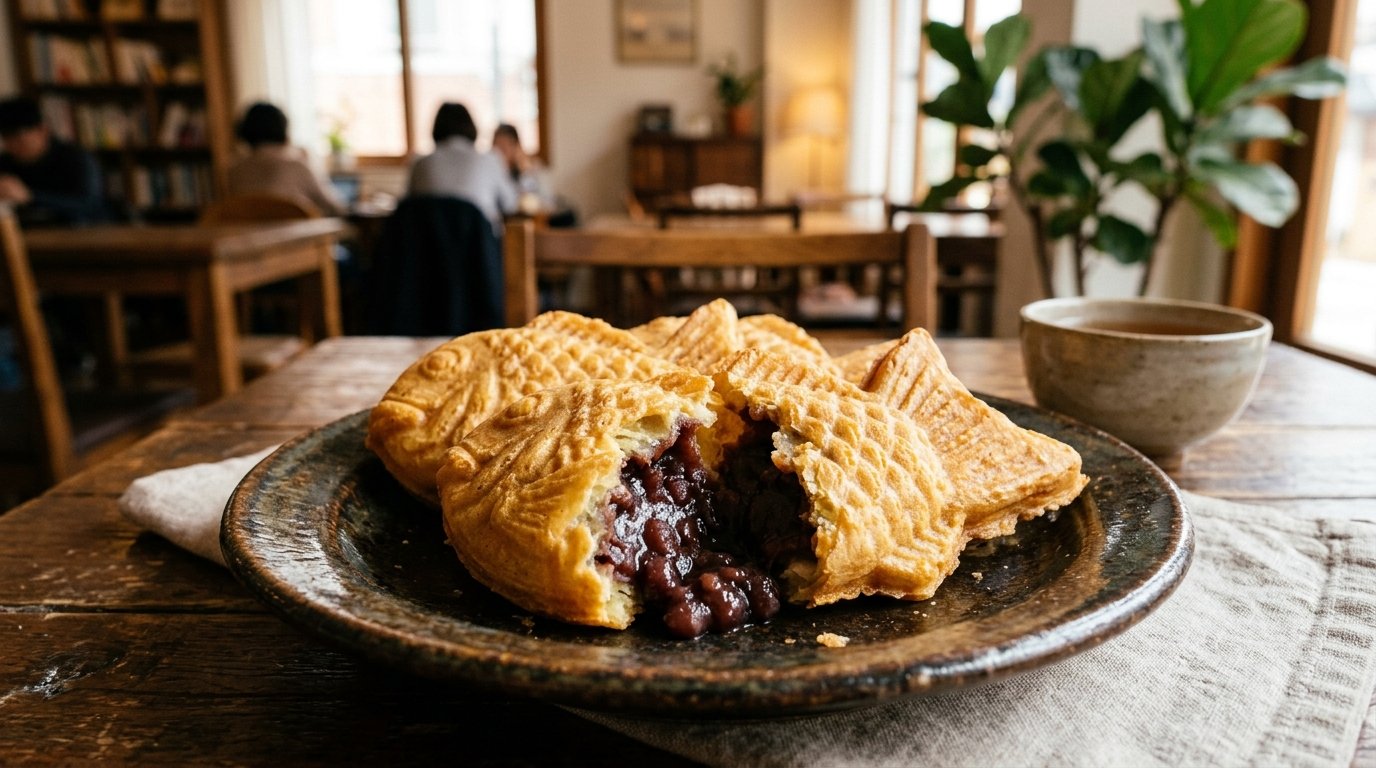
Walk down any bustling street in South Korea as temperatures drop in late autumn, and your senses will immediately catch a warm, buttery, waffle-like scent wafting from street carts. That inviting aroma belongs to Bungeoppang (붕어빵), Korea’s iconic fish-shaped waffle pastry filled with warm, sweet red bean paste. Named after the crucian carp (bungeo in Korean), this charming street snack has been comforting generations of Koreans for nearly a century.
Crispy and waffle-like on the edges, soft and tender on the inside, and filled with smooth, sweetened azuki red bean paste, Bungeoppang is a beloved winter staple. Whether you own a fish-shaped mold pan or a standard waffle iron, bringing this authentic Korean street food favorite into your home kitchen is surprisingly easy. Here is a complete, step-by-step guide to making perfect Bungeoppang from scratch.
What Is Bungeoppang (붕어빵)?
Bungeoppang is a traditional Korean fish-shaped pastry cooked in a double-sided cast-iron mold. Derived from the Japanese taiyaki introduced during the 1930s, Koreans adapted the recipe using a simpler batter and a distinctively rich sweet red bean paste (pat, 팥). Over time, Bungeoppang became deeply woven into Korean pop culture and nostalgia, spawning fun debates such as whether eating the head or tail first reveals your personality traits!
Ingredients
To prepare authentic Bungeoppang at home, gather the following ingredients divided between the light waffle batter and the sweet filling:
For the Pastry Batter:
- All-Purpose Flour: 1 cup (approx. 120g)
- Glutinous Rice Flour (Chapssal-garu): 2 tablespoons — adds a subtle chewy elasticity to the interior
- Baking Powder: 1 teaspoon
- Baking Soda: ¼ teaspoon
- Granulated Sugar: 2 tablespoons
- Fine Sea Salt: ¼ teaspoon
- Whole Milk (or Water): ¾ cup (approx. 180ml)
- Unsalted Butter (Melted): 1 tablespoon
- Egg: 1 large egg
- Vanilla Extract: ½ teaspoon
For the Sweet Filling:
- Sweetened Red Bean Paste (Anko / Pat): 1 cup (available pre-made in Asian grocery stores or homemade)
- Vegetable Oil or Cooking Spray: For greasing the mold pan
Prep Time, Cook Time, and Servings
Prep Time: 15 minutes
Cook Time: 15 minutes
Total Time: 30 minutes
Serves: 8 fish-shaped pastries (4 servings)
How to Make Bungeoppang (Step-by-Step Instructions)
Follow these easy steps to produce perfectly golden, crisp-edged Bungeoppang:
- Sift Dry Ingredients: In a medium mixing bowl, whisk together the all-purpose flour, glutinous rice flour, baking powder, baking soda, sugar, and salt until thoroughly combined.
- Mix Wet Ingredients: In a separate bowl or measuring jug, whisk together the milk, egg, melted butter, and vanilla extract.
- Combine and Rest: Pour the wet mixture into the dry ingredients. Whisk smoothly until a pancake-like batter forms without large lumps. Pour the batter into a pitcher or measuring cup with a spout for easy pouring. Let the batter rest for 10 minutes at room temperature.
- Preheat and Oil the Mold: Heat your Bungeoppang fish mold pan over medium-low heat on your stovetop. Brush both the top and bottom fish cavities generously with vegetable oil or cooking spray.
- First Batter Layer: Pour a thin layer of batter into each fish mold, filling it about ⅓ full (making sure the fins and tail receive a little batter).
- Add the Sweet Red Bean Center: Place 1 to 1 ½ tablespoons of sweet red bean paste directly in the center of each fish cavity, avoiding the very edges.
- Cover and Seal: Pour additional batter directly over the red bean paste to cover it completely and fill the fish mold to just under the rim.
- Close and Flip: Immediately close the hinged lid of the Bungeoppang pan. Turn the pan over onto the other side over low-medium heat.
- Griddle Until Golden: Cook for about 2 to 3 minutes on one side, then flip the pan back over and cook for another 2 to 3 minutes. Open the pan slightly to check for a deep golden-brown crust.
- Cool and Serve: Carefully transfer cooked fish pastries to a wire cooling rack using wooden tongs. Let cool for 2 minutes to crisp up before serving warm. Repeat with remaining batter.
What Does It Taste Like?
Bungeoppang offers an incredible contrast of textures and comforting flavors. The exterior edges are crisp and waffle-like, while the inner pastry walls are tender, fluffy, and slightly chewy. Inside, the warm sweetened red bean paste provides an earthy, rich, molasses-like sweetness that complements the subtle vanilla and butter notes of the pastry shell.
Chef’s Tips for the Best Results
- Brush Oil Thoroughly: Ensure every nook and cranny of the fish mold (especially the fins and tail) is oiled before each batch to prevent sticking.
- Control Heat Carefully: Cook over low to medium-low heat. High heat will brown the outer skin before the batter cooks through, resulting in a doughy center.
- Use a Wire Cooling Rack: Avoid stacking hot Bungeoppang directly on a flat plate immediately after cooking, as trapped steam will make the crispy skin soggy. A wire rack maintains maximum crunch.
Recipe Variations
- Custard Cream (Shu-Cream Bungeoppang): Replace red bean paste with rich vanilla pastry custard—a wildly popular alternative among younger generations in Korea.
- Chocolate / Nutella Bungeoppang: Stuff the pastry center with Nutella or dark chocolate chips for a decadent modern twist.
- Cheese Bungeoppang: Fill with shredded mozzarella or sweet cream cheese for a warm, savory-sweet cheese pull.
What to Serve With It
Bungeoppang makes a cozy snack or dessert. Serve it alongside:
- Korean Roasted Teas: Hot Korean barley tea (Boricha) or corn tea (Ooksusu-cha) balances the sweetness perfectly.
- Hot Milk or Milk Tea: A classic pairing enjoyed by children and adults alike across Seoul during winter.
- Iced Americano: The dark, bitter notes of an espresso cut through the sweet red bean filling effortlessly.
Frequently Asked Questions
Can I make Bungeoppang if I don’t own a fish-shaped mold pan?
Yes! While you won’t get the iconic fish shape, you can pour the exact same batter into a standard Belgian waffle maker or electric waffle iron, spooning red bean paste into the middle before closing.
Can you freeze leftover Bungeoppang?
Completely cooked Bungeoppang freezes wonderfully. Let them cool, store them in a freezer-safe bag for up to 1 month, and reheat directly in an air fryer at 350°F (175°C) for 3 to 4 minutes or in a toaster until hot and crispy.
Is sweet red bean paste hard to find?
Not at all. Pre-made sweet red bean paste (labeled as Red Bean Paste or Anko) is widely available in all Asian grocery stores and online retail shops.
Conclusion
Making authentic Korean Bungeoppang at home brings all the charm, warmth, and nostalgia of Seoul’s street food culture straight to your kitchen. With its crisp golden shell, tender waffle texture, and rich sweet red bean center, this adorable fish pastry is guaranteed to bring smiles to family and friends of all ages.
Are you excited to try making Bungeoppang at home? Do you prefer the traditional sweet red bean filling or creamy vanilla custard? Share your favorite variations and thoughts in the comments below!