
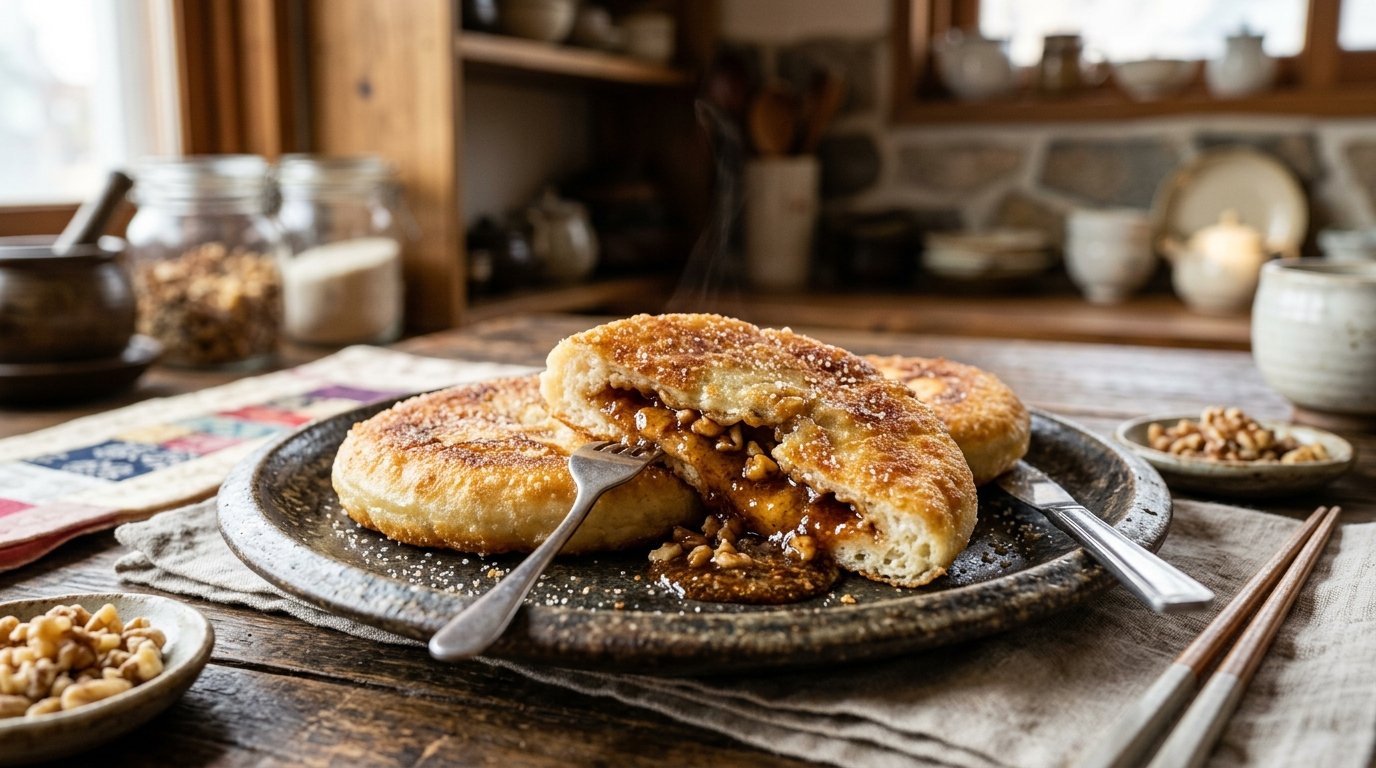
If you have ever strolled through the chilly streets of Seoul during autumn or winter, chances are you were drawn in by the irresistible aroma of griddled dough, caramelizing brown sugar, and aromatic cinnamon. That intoxicating scent belongs to Hotteok (호떡), South Korea’s ultimate street food comfort pancake. Crisp and golden on the outside with a delightfully chewy yeast interior, each hotteok explodes with a molten filling of dark brown sugar, warm cinnamon, and toasted chopped nuts upon taking a bite.
For lovers of traditional pancakes, warm spices, and nutty fillings, Hotteok is an absolute dream dessert. While street vendors in Seoul press these sweet discs using specialized stainless-steel pressers, you can easily replicate authentic, restaurant-quality Hotteok right in your home kitchen. Below is a complete, step-by-step guide to mastering this iconic Korean treat.
What Is Hotteok (호떡)?
Hotteok is a popular Korean street food pancake made from a soft, yeast-leavened dough stuffed with a fragrant blend of brown sugar, cinnamon, and finely chopped nuts. Introduced to Korea by Chinese merchants in the late 19th century, Hotteok evolved over the decades into a distinctly Korean delicacy. Unlike American breakfast pancakes which rely on baking powder for a fluffy cake-like texture, Hotteok uses yeast and glutinous rice flour (chapssal-garu), giving the pancake its signature crispy-chewy (jeondok-jeondok) bite.
Ingredients
To ensure authentic flavor and optimal texture, divide your ingredients into the dough mixture and the sweet filling:
For the Dough:
- All-Purpose Flour: 1 ½ cups (approx. 180g)
- Glutinous Rice Flour (Chapssal-garu): ½ cup (approx. 60g) — gives the dough its signature chewiness
- Instant Dry Yeast: 1 teaspoon
- Granulated Sugar: 1 tablespoon
- Fine Sea Salt: ½ teaspoon
- Lukewarm Water or Milk: ¾ cup (approx. 180ml, warmed to about 105°F / 40°C)
- Vegetable Oil: 1 tablespoon (plus extra for cooking and greasing hands)
For the Sweet Cinnamon-Nut Filling:
- Dark Brown Sugar: ½ cup packed (provides deep molasses flavor)
- Ground Cinnamon: 1 teaspoon
- Chopped Walnuts or Pecans: ¼ cup finely chopped
- Toasted Sunflower or Pumpkin Seeds (Optional): 2 tablespoons
Prep Time, Cook Time, and Servings
Prep Time: 20 minutes
Rising Time: 1 hour
Cook Time: 15 minutes
Total Time: 1 hour 35 minutes
Serves: 6 medium Hotteok pancakes (3 to 4 servings)
How to Make Hotteok (Step-by-Step Instructions)
Follow these detailed steps to achieve perfectly golden, leak-free Hotteok:
- Activate the Yeast: In a large mixing bowl, combine the lukewarm water (or milk), sugar, and instant dry yeast. Stir gently and let sit for 5 minutes until slightly frothy.
- Mix the Dough: Add the all-purpose flour, glutinous rice flour, salt, and 1 tablespoon of vegetable oil to the yeast mixture. Mix thoroughly with a wooden spoon or spatula until a sticky, elastic dough forms. (The dough will be wetter and stickier than bread dough; do not add excess dry flour).
- First Rise: Cover the bowl tightly with plastic wrap or a damp kitchen towel. Place in a warm draft-free spot for about 45 to 60 minutes, or until the dough doubles in volume and shows spiderweb-like air pockets.
- Prepare the Filling: In a small bowl, mix together the dark brown sugar, ground cinnamon, chopped walnuts, and seeds until evenly combined. Set aside.
- Divide and Shape: Once the dough has risen, punch it down gently to release air bubbles. Generously coat your hands with vegetable oil to prevent sticking. Divide the dough into 6 equal portions (approx. 60–70g each).
- Stuff the Dough: Flatten one portion of dough in the palm of your hand into a flat disk about 4 inches wide. Place 1 heaped tablespoon of the cinnamon-sugar filling into the center. Pull the edges of the dough upward over the filling and pinch tightly to seal completely into a smooth ball.
- Pan-Fry and Flatten: Heat 2 to 3 tablespoons of vegetable oil in a non-stick skillet over medium-low heat. Place 2 or 3 dough balls into the pan, seam-side down. Cook for 30 seconds until the bottom turns light golden. Flip the ball over, and using a flat spatula or greased measuring cup, press down firmly to flatten into a round pancake about ½ inch thick.
- Cook to Perfection: Lower heat to low. Fry for 2 to 3 minutes per side, flipping once or twice, until both sides are deep golden brown and the sugar filling inside is completely melted into liquid caramel syrup.
- Serve Warm: Transfer to paper towels to drain excess oil. Let cool for 2 to 3 minutes before serving.
What Does It Taste Like?
Hotteok offers a thrilling contrast of temperatures, textures, and tastes. The first bite yields a crispy, golden-brown crust followed by a soft, warm, stretchy bread layer. As you bite deeper, the center bursts with a warm, gooey, molten caramel-cinnamon syrup balanced by the crunchy, earthy nuttiness of chopped walnuts and toasted seeds. It tastes rich, cozy, comforting, and perfectly spiced.
Chef’s Tips for the Best Results
- Oil Your Hands Generously: Hotteok dough is naturally sticky. Keeping your palms well-oiled makes shaping and stuffing the dough effortless without tearing.
- Seal the Seams Tightly: Pinch the dough gathered over the filling firmly. A leak during frying will cause the sugar syrup to burn in the pan.
- Cook Over Low-Medium Heat: High heat will scorch the outer crust before the interior yeast dough cooks through and the inner sugar melts completely into syrup.
- Beware of Hot Syrup! The inner sugar syrup reaches extremely high temperatures during frying. Allow the hotteok to rest for 2 minutes before eating to avoid burning your tongue.
Recipe Variations
- Busan Seed Hotteok (Ssiat Hotteok): Famous in Busan’s BIFF Square, these hotteok are sliced open after frying and stuffed with a generous handful of toasted pine nuts, sunflower seeds, and pumpkin seeds.
- Cheese Hotteok: Replace or combine the sugar filling with shredded mozzarella cheese for a savory, gooey cheese pull.
- Japchae Hotteok: A popular savory variation filled with seasoned glass noodles, mushrooms, and carrots.
What to Serve With It
Hotteok makes a delightful afternoon snack or dessert. Pair it with:
- Hot Korean Teas: Korean roasted barley tea (Boricha), corn silk tea (Ooksusu-cha), or traditional green tea help balance the richness of the sweet pancake.
- Black Coffee or Iced Americano: The bitterness of fresh coffee cuts through the sweet cinnamon syrup beautifully.
- Vanilla Ice Cream: Serve a hot, freshly cooked Hotteok alongside a scoop of cold vanilla bean ice cream for a heavenly temperature contrast.
Frequently Asked Questions
What if I don’t have glutinous rice flour (chapssal-garu)?
You can substitute the glutinous rice flour with an equal amount of all-purpose flour or tapioca starch. The pancake will still taste delicious, though it will be slightly less chewy.
Can I make Hotteok ahead of time or freeze them?
Yes. Cooked hotteok can be cooled, wrapped individually in plastic wrap, and frozen for up to 1 month. Reheat directly from frozen in a dry skillet over low heat or in an air fryer at 350°F (175°C) for 3 to 5 minutes until crisp.
Can I bake Hotteok instead of frying?
While traditional hotteok is shallow-fried for maximum crispness, you can bake shaped hotteok on a parchment-lined baking sheet at 375°F (190°C) for 15 minutes until golden. Brush with melted butter or oil before baking.
Conclusion
Mastering authentic Korean Hotteok at home is a deeply rewarding culinary experience. With its irresistible combination of crispy dough, fragrant cinnamon syrup, and crunchy toasted walnuts, this sweet pancake brings the comforting magic of Seoul’s winter street food culture straight to your dining table.
Are you ready to try making Hotteok at home? Do you prefer the traditional cinnamon-walnut filling or the extra seed-stuffed Busan style? Share your cooking results and thoughts in the comments below!