
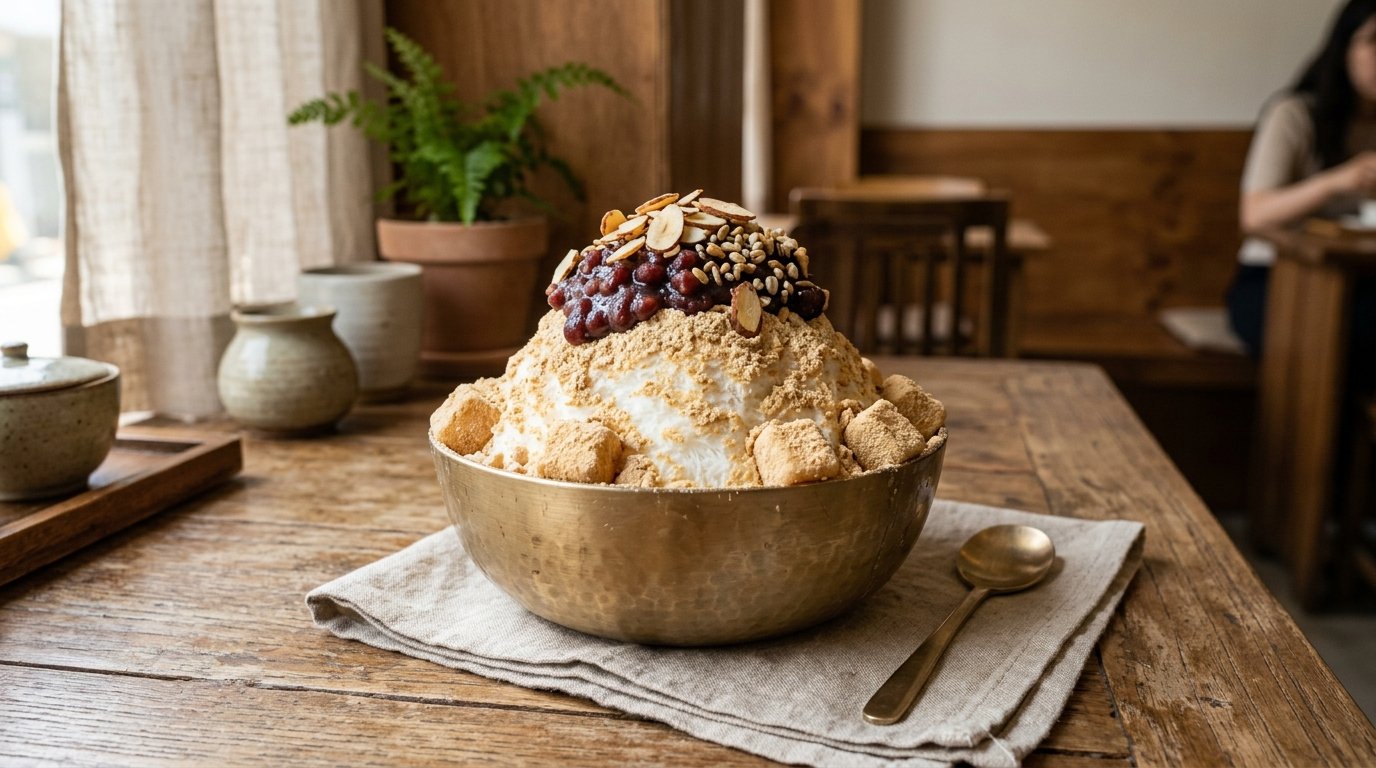
When the summer heat rolls into South Korea, locals and tourists alike flock to bustling cafes for a single, irresistible treat: Bingsu (빙수). Known worldwide as Korea’s premier shaved ice dessert, Bingsu is far more than a simple snow cone. With its cloud-like, micro-shaved frozen milk, rich toppings, and perfect harmony of textures, this beloved dish has evolved into a global culinary phenomenon and an essential cornerstone of Korean cafe culture.
From centuries-old historical origins to modern viral creations like fresh mango snow bowls and roasted soybean Injeolmi, Bingsu represents the ultimate expression of Korean dessert artistry. Here is everything you need to know about Bingsu—its history, popular variations, how to make it at home, and where to find the absolute best bowls in Seoul.
The Fascinating Origin Story: From Ancient Royalty to Modern Cafes
The history of shaved ice in Korea dates back centuries to the Joseon Dynasty (1392–1897). Historical records show that government officials shared natural ice harvested from winter rivers, crushed it finely, and topped it with preserved seasonal fruits to stay cool during sweltering summer months.
The modern era of Bingsu emerged in the mid-20th century with the addition of sweet red bean paste (pat, 팥), giving birth to the classic Patbingsu (팥빙수). During the post-war era, toppings expanded to include sweetened condensed milk, canned fruit cocktail, and chewy rice cakes (tteok). In recent decades, Korean dessert innovators revolutionized the recipe by replacing plain water ice with frozen sweetened milk, creating a velvety, snow-flake texture that melts instantly on the tongue.
Most Popular Bingsu Varieties You Must Try
Modern Korean dessert cafes have elevated Bingsu into a canvas for incredible flavor combinations. Here are the iconic varieties every food lover should know:
1. Classic Patbingsu (팥빙수)
The timeless original. A generous bed of shaved milk ice topped with slow-simmered, sweetened red beans, small chewy tteok cubes, roasted grain powder (misutgaru), and a drizzle of condensed milk. It strikes a nostalgic balance between earthy sweetness and creamy texture.
2. Injeolmi Bingsu (인절미빙수)
Popularized by the famous dessert chain Sulbing, this variety replaces red beans with a heavy dusting of injeolmi (nutty roasted soybean powder), sliced almonds, and soft Korean rice cakes. It is deeply aromatic, nutty, and savory-sweet.
3. Fresh Mango & Fruit Bingsu (망고빙수)
A modern luxury favorite across Seoul’s high-end hotel lounges and trendy cafes. Ripe, succulent mango slices cascade over delicate milk snow, topped with mango puree and coconut cream or vanilla ice cream.
4. Match & Green Tea Bingsu (녹차빙수)
Infused with bittersweet Korean green tea or matcha powder, topped with dark chocolate shards, red beans, and green tea ice cream—a favorite for tea connoisseurs.
How Bingsu Is Made: The Secret of Milk Snow
Unlike Western snow cones or Hawaiian shaved ice, which crush hard water ice into coarse granules, high-end Bingsu relies on specialized Korean freezing technology:
- The Milk Base: Whole milk is often mixed with sweetened condensed milk, cream, or coconut milk before freezing.
- Instant Micro-Freezing: Modern Bingsu machines freeze liquid milk instantly upon contact with a drum cooled to -30°C (-22°F), shaving it into gossamer ribbons of snow.
- Layered Assembly: Toppings are layered both inside and on top of the bowl so every spoon delivers an equal balance of flavor and texture.
Easy Home Recipe: Make Milk Bingsu Without a Special Machine
You don’t need expensive commercial equipment to enjoy authentic Korean milk bingsu at home. Follow this simple freezer-bag technique:
- Prepare the Milk Mixture: In a measuring cup, mix 2 cups of whole milk, 3 tablespoons of sweetened condensed milk, and 1 tablespoon of heavy cream until dissolved.
- Freeze in Ziploc Bag: Pour the mixture into a ziplock freezer bag, seal tightly while pressing out air, and lay it flat in your freezer for 4 to 5 hours until completely solid.
- Crush into Snow: Remove the frozen bag and massage or crush it firmly with your hands or a rolling pin. The frozen milk will break down into soft, fluffy snow flakes.
- Assemble and Serve: Transfer the milk snow to a chilled bowl. Top with sweet red bean paste, mini tteok rice cakes, roasted soybean powder, and extra condensed milk. Serve immediately!
Frequently Asked Questions
Is Bingsu very sweet?
Not excessively. Traditional Korean desserts emphasize balanced sweetness. The unsweetened or lightly sweetened milk snow base cuts through rich toppings like red bean paste or ripe fruits, delivering a refreshing taste without feeling heavy.
Is Bingsu gluten-free and vegan-friendly?
Traditional Patbingsu and fruit Bingsu are naturally gluten-free (check rice cake ingredients). For vegan diets, many modern cafes now offer soy milk, oat milk, or coconut milk snow bases paired with fresh fruit or red beans.
How should you eat Bingsu properly?
While some prefer to mix the entire bowl into a smooth slush, Korean dessert connoisseurs recommend taking gentle, layered spoonfuls from the top downward to preserve the delicate, fluffy texture of the milk snow.
Conclusion
Bingsu is more than just a refreshing summer treat—it is a beloved icon of Korean culinary culture that brings friends and families together around shared bowls of sweet, snowy perfection. Whether you savor a traditional Patbingsu in a historic Seoul Hanok cafe or whip up a quick milk snow bowl at home, this extraordinary dessert is guaranteed to delight your palate.
Have you tried Korean Bingsu yet? Which flavor is your absolute favorite—classic red bean, savory Injeolmi, or fresh Mango? Share your favorite dessert spots and thoughts in the comments below!